
A purchase order is only the starting point: the supplier still has to convert your brief into approved specifications, branded components, assembled kits, and a delivery plan. By the end, you will know what information to submit, how to approve samples and quality checks, how many kits to order, and which delivery details to confirm before dispatch.
Key takeaways
- Provide dimensions, materials, branding files, quantities and delivery dates before production.
- Approve a signed quotation, artwork proof and physical sample before bulk manufacturing.
- Define kit contents, spare quantities and packing order before assembly begins.
- Check branding, stitching, accessories, quantities and cartons before dispatch.
What information must you provide before production starts?
A purchase order that says only “jute kit” is incomplete. For corporate joining kits in Nagpur, confirm every production and delivery variable before the supplier cuts fabric, prints branding, or purchases accessories.
1. Provide the employee count, joining dates by batch, employee groups, delivery locations, and required receipt date. State whether quantities differ for departments, job roles, branches, or remote employees.
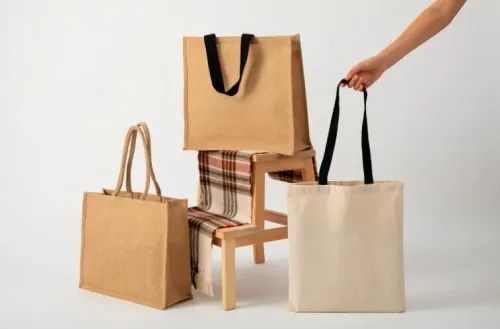
2. Define the kit contents and packing instructions: bag dimensions, required load, fabric type, GSM, handle construction, print area, closure, accessory list, and packing configuration. Identify each item and quantity per kit, such as a notebook, bottle, folder, ID-card holder, stationery, apparel, or welcome letter.
3. Send branding files with colour references and artwork formats. Include logo files, print colours, placement, personalised data fields, and the approved quantity. Personalised fields may include names, employee numbers, QR codes, or office locations; provide them in a controlled file with access limited to authorised staff.
The supplier should convert this brief into a written production specification covering fabric, GSM, handles, print method and area, closure, accessories, packaging, quantity, and delivery terms. Ask whether the date means ex-works completion, dispatch, delivery to one Nagpur address, or delivery to multiple branches.
Production completion is not usable receipt: cartonisation, transport, unloading, and distribution still take time.
How do quotation, artwork approval and sampling control the order?
The order is controlled by three gates: a complete quotation, signed artwork approval, and a sample when the design or contents create fit and finish risks.
1. Check the quotation against a component-level bill of materials. It must name each bag, folder, notebook, bottle, ID-card item, stationery piece, welcome letter and personalised insert, with quantities per kit. Confirm taxes, transport scope, carton packaging, delivery points and substitution rules.
A quotation that allows “equivalent” items without written approval can change the kit after the purchase order.
2. Approve artwork only after checking the actual logo size, placement, spelling, colour references and print method. Mark safe distances from seams, handles, zippers and gussets. After printing, a correction may require reprinting panels, remaking bags or accepting a later dispatch date.
SP Jute Craft Enterprises can use this written specification to separate approved design decisions from assumptions in a digital mock-up.
3. Request a pre-production sample for a gusseted bag, multi-colour branding, notebook, bottle, apparel or several inserts. A screen proof cannot show hand feel, handle comfort, usable capacity, print bleed or whether packed components fit.
| Printing method | Practical difference |
|---|---|
| Screen printing | Strong for simple solid artwork; ink feel depends on jute texture |
| Transfer or digital | Handles detail; may add film, coating or a different tactile finish |
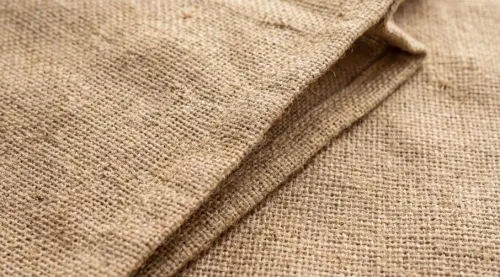
Specify whether “eco-friendly” refers to fibre, ink, coating, packaging or the complete kit. Lining, lamination, blending and synthetic fittings can improve stiffness or moisture resistance while complicating recycling, compostability, lead time and sustainability claims.
Related products
 | CORPORATE GIFTING # Corporate Joining Kit for Corporate Gifting – SP Jute Craft Enterprises Make every new employee feel welcomed with a thoughtfully designed... View product → |
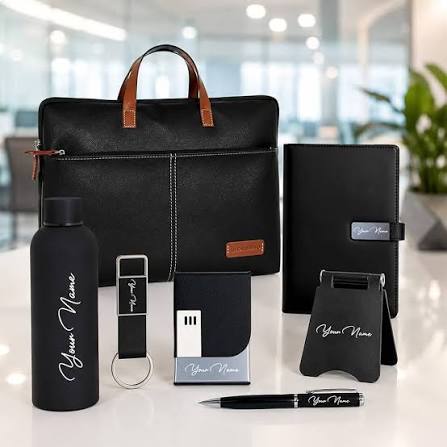 | CORPORATE GIFTING # Employee Welcome Kit for Corporate Gifting – SP Jute Craft Enterprises Looking for a **professional, attractive, and customized Employee Welcome... View product → |
How are kit contents and order quantities decided?
A component-level bill of materials decides what goes inside bulk corporate joining kits. It should name each bag, folder, notebook, bottle, ID-card holder, stationery item and welcome letter, with the quantity per kit.
| Type | Purpose and timing | Personalisation and requirements |
|---|---|---|
| Employee joining kit | Issued on the joining date | Name, employee number, ID-card holder, joining documents and role-specific equipment |
| Employee welcome kit | Given during the first day or induction | Welcome letter, branded items and office-location information |
| Corporate gift hamper | Recognition or festive gifting | Usually standardised, with limited employee data and no onboarding documents |
| Onboarding package | Supports the full induction process | Documents, QR codes, access instructions and equipment issued by the employer |
Match contents to employee group, job role, office or remote work, location and dress rules. A jute laptop bag and file folder suit employees carrying equipment; remote staff may need fewer physical items. Check the packed weight before adding a bottle, apparel, notebook, stationery and inserts.
Use this quantity formula:
- Confirmed employees + expected replacements + reserve stock. For 80 joiners, four expected replacements and a 10% reserve, order 92 kits.
- Keep personalised items separate from non-personalised stock so a late name change does not waste complete kits.
- Use batch dates and delivery locations to split the production and packing schedule.
For custom corporate onboarding kits, store names, employee numbers, QR codes and joining documents in a controlled data file. Restrict access to minimum fields, define who may print and pack, and require surplus labels and misprints to be destroyed or returned. Personalised employee joining kits are not anonymous promotional merchandise.
What should be checked during production, assembly and packing?
Approval starts two quality-control stages, not one. First, inspect each component against the production specification; an approved sample alone does not define acceptable variation.
- Check bag dimensions and tolerance, fabric or GSM, handle strength, stitching, gusset size, lining, zipper or closure, pocket placement, print registration, colour tolerance, and the stated load requirement.
Agree the inspection level and acceptance number before production. ISO 2859-1 provides a lot-by-lot sampling framework, but you must choose the inspection level and the number of defective units that rejects the lot.
Assembly creates a separate failure point. Use a packing checklist to verify the correct employee, department or location insert, component count, logo orientation, barcode or identifier, welcome letter, and closure method. One wrong insert can make an otherwise conforming bulk corporate joining kit unusable.
Material choice also changes performance and disposal:
| Material | Durability | Appearance | Cost | Reuse | Moisture | End-of-life |
|---|---|---|---|---|---|---|
| Jute | Good | Natural | Low–medium | Good | Low unless treated | Natural fibre; additives matter |
| Canvas | High | Structured | Medium | High | Medium | Cotton disposal route |
| Cotton | Medium | Soft | Medium | High | Low | Fibre recycling or disposal |
| Polyester | High | Consistent | Low–medium | High | High | Synthetic recycling |
| Non-woven polypropylene | Medium | Plain | Low | Moderate | High | Synthetic recycling |
| Paperboard | Low–medium | Printed | Low | Low–moderate | Low | Recyclable if clean |
| Leatherette | Medium | Premium | Medium–high | Moderate | High | Difficult composite disposal |
A jute bag may include coatings, laminates, lining, blends, or synthetic fittings. Request certificate scope and validity: GOTS covers qualifying organic-fibre processing and chain of custody, while OEKO-TEX STANDARD 100 concerns harmful substances in tested textile components, not automatically the entire custom corporate onboarding kit.
What happens at dispatch and delivery in Nagpur?
Production completion is not usable receipt. For corporate joining kits in Nagpur, confirm cartonisation, loading, freight, unloading, and the date stock reaches the office or branch.
Before dispatch, the corporate joining kit supplier in Nagpur should send a final packing list. Confirm carton counts, kit quantities by version or location, carton labels, protective packing, invoice, transport documents, and removal of personalised names, employee numbers, QR codes, or joining documents from outer cartons.
1. State the delivery model: one Nagpur address, several branches, employee-level delivery, or delivery to one office for later internal distribution. Name the authorised receiver who will count cartons and sign the delivery record.
2. At receipt, count cartons and kits against the packing list before shelving them. Photograph damaged cartons, open seals, shortages, wrong versions, print defects, and missing components; write each issue against its carton number.
3. Quarantine disputed stock instead of mixing it with usable kits. Record the replacement quantity, required version, affected employee or location, and agreed resolution date.
4. Review whether the Legal Metrology (Packaged Commodities) Rules apply to the final pre-packed format. The answer depends on packaging, sale or distribution to consumers, and the business-to-business transaction structure; do not assume an exemption.
Store reserve stock in a dry, labelled area away from moisture and crushing. Retain the signed delivery record, packing list, photographs, shortage report, invoice, transport documents, approved specification, and replacement correspondence for the next order.
Frequently asked questions
What information must you provide before production starts?
Provide the kit dimensions, fabric or material, colour, branding method, logo files, accessory list, quantity, packing instructions, delivery address and required date.
How do quotation, artwork approval and sampling control the order?
The quotation fixes specifications, prices, taxes, transport and payment terms. Approve the final artwork proof and, for complex orders, a physical sample before bulk production.
How are kit contents and order quantities decided?
List every item, its quantity per kit, approved brand or specification, assembly order and packing format. Add spare units for replacements and account for confirmed employee numbers.
What should be checked during production, assembly and packing?
Check fabric, dimensions, stitching, print position, colour, accessories, kit contents, assembly count, labels, carton strength and the condition of finished packs.
What happens at dispatch and delivery in Nagpur?
Confirm the dispatch date, carton count, transport method, delivery address, contact person and invoice documents. Record received cartons and inspect sample kits before signing delivery.
Related product
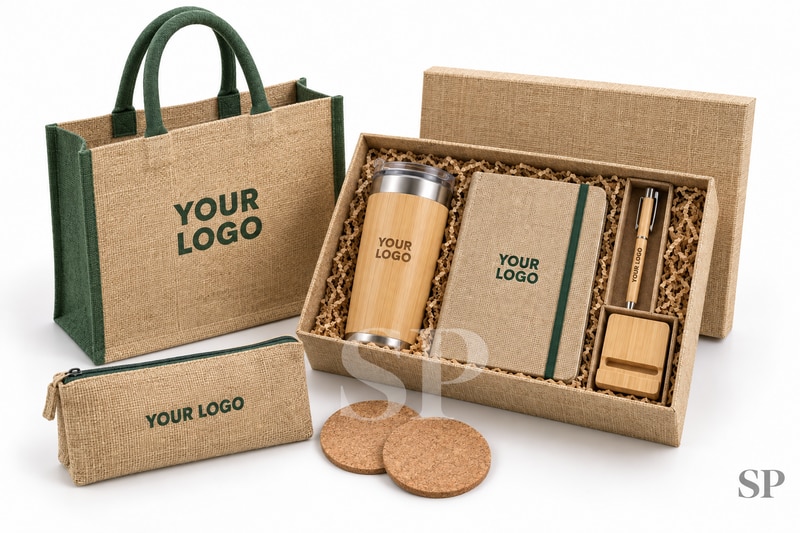 | ECO FRIENDLY PRODUCTS # Eco-Friendly Jute Gift Kit for Corporate Gifting – SP Jute Craft Enterprises Make corporate gifting more thoughtful with an **Eco-Friendly Jute... View product → |
Keywords