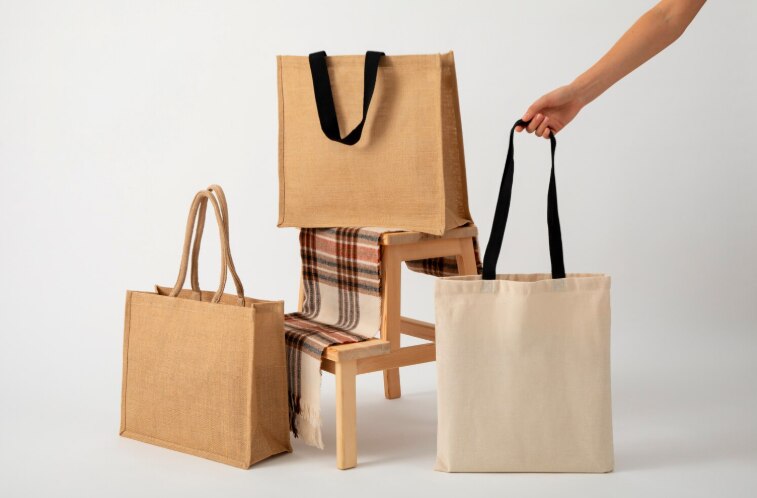
A bulk tote order succeeds only when the purchase specification covers fabric, dimensions, handles, printing, testing, and delivery—not merely the phrase “cotton bag.” By the end, you will know how to compare a Nagpur manufacturer with a trader, approve a production sample, and protect your order from avoidable quality disputes.
Key takeaways
- Trace fabric, stitching, printing, and subcontractors before placing an order.
- Specify fabric weight, dimensions, handles, seams, printing, quantity, and delivery date.
- Test the filled bag with its intended load before approving production.
- Approve a signed pre-production sample and retain its measurements for repeat orders.
How to verify a cotton tote bag manufacturer in Nagpur
Verify a cotton tote bags manufacturer in Nagpur by tracing the production chain, not by trusting a catalogue photograph or low unit price. Ask where the cotton fabric is sourced or woven, where cutting and stitching occur, and whether printing is done in-house or by a subcontractor.
A genuine manufacturer can explain the sequence from fabric receipt to inspection and dispatch, show representative construction samples, and name the person controlling inspection at each stage. Ask for separate sample and bulk quotations.
Screen setup, colour matching, sampling, and artwork corrections can create one-time charges, so confirm whether each charge is refundable or included in the production rate.
Request these details before comparing suppliers:
- Dispatch location and production address
- Estimated transport time from Nagpur
- Packing method and carton markings
- Person responsible for approving repeat orders
Check each claim against physical evidence:
| Claim | Evidence to request | Warning sign |
|---|---|---|
| Fabric source | Mill, weaving location, composition, and GSM | Vague “premium cotton” description |
| Production control | Cutting, stitching, inspection sequence, and construction samples | Supplier cannot identify the workshop |
| Printing capacity | In-house equipment or named subcontractor and strike-off process | Colour or artwork approval is verbal only |
Use the same questions to evaluate local manufacturing capability, sample control, and order communication before placing a bulk order.
Write a production specification before requesting a bulk quote
1. Write the quote brief as a measurable specification, not “cotton bag.” State the composition, cotton type, weave, GSM, finished height and width, gusset depth, handle length, handle width, handle drop, seam construction, thread specification, closure, printing method, colour reference, packing method, and acceptable tolerances.
For bulk cotton tote bags, identify cotton canvas when you need a more rigid bag for heavier or repeated use; choose lightweight cotton sheeting for lower-cost distribution.
2. Do not treat GSM as the finished bag weight. Estimate fabric weight by multiplying the total fabric area by GSM, then add separate allowances for handles, hems, seams, cutting waste, and packaging. Request an approved pre-production sample because two fabrics with the same nominal GSM can produce different finished weights.
3. State whether the fabric is pre-shrunk or pre-washed, and define dimensional tolerances after the agreed conditioning or wash procedure. Otherwise, a bag that matches the loom-state measurement can shrink or distort before delivery.
4. If you specify organic cotton, request the certificate, certificate scope, and product details. GOTS “organic” labelling generally requires at least 95% certified organic fibres, while “made with x% organic” uses a 70% threshold under its labelling categories. OEKO-TEX STANDARD 100 covers harmful-substance testing, not organic or fair-trade status.
Give the same written brief to each cotton tote bag supplier in Nagpur so quotations remain comparable.
Choose tote dimensions and handles for the actual load
Choose the finished dimensions from the load, not from a catalogue pattern.
| Load | Shape to specify | Main construction concern |
|---|---|---|
| Documents or small event kit | Shallow, compact body | Comfortable handle drop and clean top hem |
| Apparel, boxed merchandise, or groceries | Wider base with a gusset | Upright contents and reinforced bottom corners |
| Books | Gusseted base with load-bearing handles | Concentrated weight at handle and seam attachments |
Record the body length, width, height, and gusset depth. A flat measurement cannot describe usable volume. For custom cotton carry bags, specify handle drop—the distance from the top edge to the grip—and the finished handle width.
Identify whether the handles enter the top hem, use boxed-and-cross-stitched attachments, or are merely caught in a short seam; the last construction can fail while the cloth remains intact.
For bulk cotton tote bags, set a rated load target in the purchase specification. High GSM does not prove safe carrying capacity, and a reusable promotional tote is not automatically suitable for industrial loads. Test the approved sample with the real intended contents before authorising production.
Inspect the loaded sample for:
- Handle stretching and attachment movement
- Bartacks, boxed stitching, and thread breakage
- Side seams and bottom corners
- Holes, pulled fabric, and seam opening
- Body dimensions and handle drop after loading
A large print panel cannot compensate for construction that fails under weight.
Approve printing and artwork on cotton before production
Approve a physical strike-off before production; artwork on a screen is not proof of the finished print.
Screen printing suits repeat orders with a limited number of solid colours and is usually economical, but each colour needs its own screen and setup. Photographs, gradients, fine detail, and very small runs need another process priced with a strike-off.
| Process | Best fit | Main approval issue |
|---|---|---|
| Screen printing | Repeat orders with solid colours | Separate screen and setup for each colour |
| Digital or transfer printing | Photographs, gradients, fine detail, or small runs | Confirm adhesion, coverage, and cost on the actual cotton |
Send the requested vector or high-resolution file and state:
- Print area, colour count, colour references, print position, and acceptable registration tolerance
- Finished panel dimensions, keeping the logo clear of seams, hems, gussets, and handles
The printable panel on custom cotton carry bags is smaller than a flat template suggests. Natural and dyed cotton differ in background colour and absorbency, while textured cloth can soften fine lines or reduce coverage.
Ask SP Jute Craft Enterprises to approve the strike-off for colour, position, and coverage, then perform a dry rub test. If recipients will wash the cotton bags for business promotion, add a wash test to check adhesion, distortion, and shrinkage. A faded or misaligned logo can undermine the campaign after distribution.
Related product
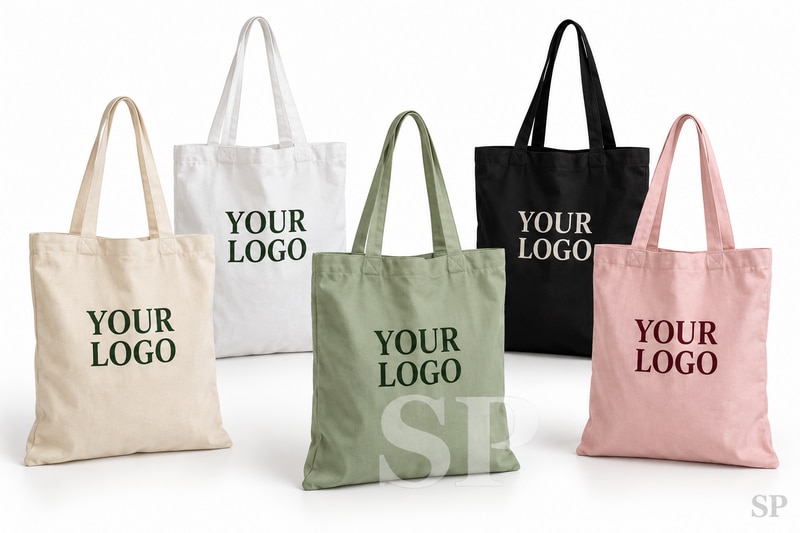 | Shopping & Promotional Bags 👜🌿 **Cotton Tote Bags – Reusable, Stylish & Perfect for Your Brand** Looking for a practical and eco-conscious alternative to plastic shopping... View product → |
Control samples, delivery, and repeat bulk orders
Approve the physical bag separately from the artwork. Artwork approval confirms colour, print position, and design; it does not prove that the bag carries its intended contents or matches the specification.
Load the sample with the real contents and record:
- Body length, width, gusset, and handle drop
- Seam, hem, handle attachment, and bartack consistency
- Finished weight or fabric composition and GSM
- Stains, holes, loose threads, and print position
- Print adhesion through a rub test
- Wash shrinkage when the bags will be washed or must retain controlled dimensions
Seal or sign the accepted sample, assign it a reference number, and attach dated photographs to the purchase order. A cotton tote bag supplier in Nagpur then has a physical standard, not just a verbal description.
Define these items before producing bulk cotton tote bags:
- Inspection method, sample quantity, and acceptable quantity tolerance
- Defect standard, including what counts as major or minor
- Packing format, carton markings, dispatch date, and delivery schedule
| Checkpoint | First order | Repeat order |
|---|---|---|
| Dimensions and handle drop | Approve against the signed sample | Compare with the retained sample |
| Fabric | Verify GSM or finished weight | Recheck GSM or finished weight |
| Print and construction | Approve colour, position, stitching, stains, and holes | Check the same points on receipt |
Ask what happens if inspection fails, and who pays for rework, replacement, or return freight. Put that answer in the purchase order before dispatch.
Frequently asked questions
How do you verify a cotton tote bag manufacturer in Nagpur?
Ask where fabric is sourced or woven, where cutting and stitching happen, and whether printing is in-house or subcontracted. Request production samples and inspect construction before ordering.
What should a bulk cotton tote bag production specification include?
State the finished dimensions, fabric weight, handle length and width, seam construction, colour, artwork, print positions, quantity, packaging, and delivery date.
How do you choose tote dimensions and handles for the actual load?
Measure the items the bag will carry, then test a filled sample. Choose handle length and reinforcement based on whether the bag will be hand-carried or worn over the shoulder.
How should you approve cotton tote bag printing before production?
Send final artwork with exact colours, dimensions, print positions, and file specifications. Approve a physical pre-production sample because fabric texture can change print appearance.
How do you control samples, delivery, and repeat bulk orders?
Record the approved sample's measurements, fabric, handles, seams, artwork, and packaging. Put inspection points and the delivery date in writing, then use the same specification for repeat orders.
Keywords